Mental Health Check In Questions for a More Balanced Life
February 23, 2026
SUBSCRIBE ON YOUTUBE
This podcast is the remedy to comparison and feeling like everyone has life figured out but you. I sit with experts, entrepreneurs and fellow creatives to explore the process of living a live we love. Including, the stumbles and mistakes that happen along the way.
Mental health check in questions are simple, intentional prompts that help you pause, notice what’s happening inside you, and respond with care instead of criticism. They aren’t meant to fix you or force insight—they’re meant to help you stay connected to yourself, especially during seasons when life feels loud, busy, or emotionally demanding. If you’ve […]
Mental health check in questions are simple, intentional prompts that help you pause, notice what’s happening inside you, and respond with care instead of criticism. They aren’t meant to fix you or force insight—they’re meant to help you stay connected to yourself, especially during seasons when life feels loud, busy, or emotionally demanding.
If you’ve been trying to keep the energy of a new year going while also just… keeping your head above water, you’re not alone. A balanced life doesn’t come from doing more—it comes from listening more closely. And mental health check in questions give you a way to do that without turning self-reflection into another performance.
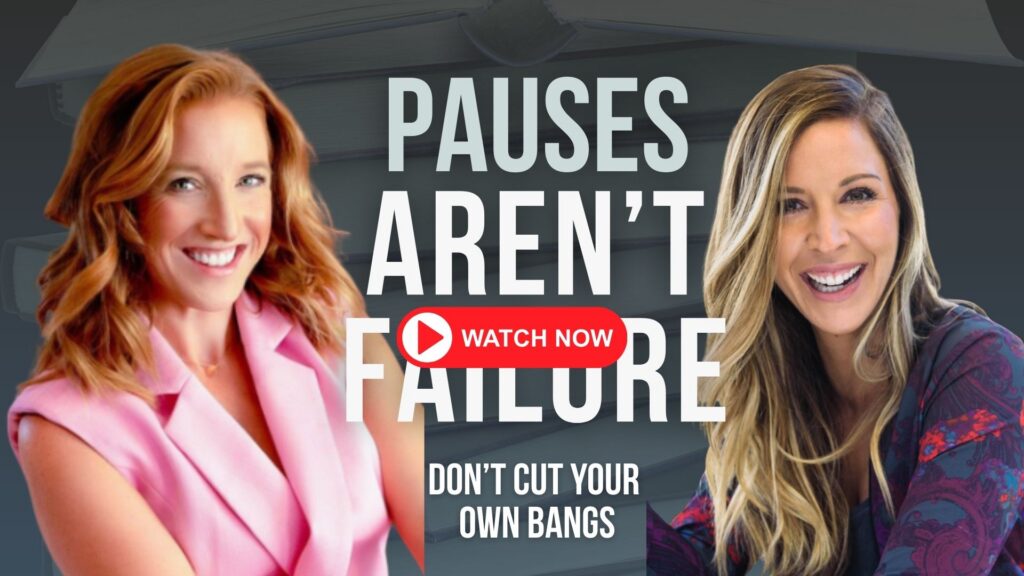
In this replay episode of Don’t Cut Your Own Bangs, I revisit a conversation with Ashlyn Thompson of Pain Is a Professor that still lights me up. We talk about why certain questions help us heal—and why others quietly keep us stuck.
What Are Mental Health Check In Questions?
Mental health check in questions are reflective prompts designed to help you notice your emotional, mental, and nervous system state in real time. They create space between what you’re feeling and how you respond.
Instead of asking, “What’s wrong with me?”—which usually leads to shame—these questions invite curiosity, self-compassion, and clarity.
They’re especially helpful for people who are high-functioning, responsible, and used to pushing through. If that’s you, these questions can help support a more balanced life by interrupting patterns of over-efforting and self-judgment.
When Questions Hurt Instead of Help
One of the most important distinctions we talk about in the episode is this:
There’s a difference between being victimized—which is real and painful—and slipping into a victim mentality, which can quietly shrink your world.
The shift often happens through the questions we ask ourselves.
Some questions sound thoughtful but actually trap us in self-blame:
Why does this always happen to me?
Why can’t I handle this better?
Why am I like this?
These “why” questions rarely offer clarity. More often, they spiral us deeper into frustration or shame.
Mental health check in questions work best when they help you move forward, not shrink inward with a judgement and a verdict.
Mental Health Check In Questions That Support a Balanced Life
Here are three grounding mental health check in questions pulled directly from this episode’s themes. Notice how each one creates room rather than pressure.
1. “What do I need today to make this 5% easier?”
This question is powerful because it doesn’t demand transformation—just relief.
A balanced life isn’t built through dramatic changes. It’s built through small, compassionate adjustments: a slower morning, a text asking for help, choosing rest without explaining yourself.
2. “Where am I asking myself to produce when I actually need to breathe?”
Many of us were taught that growth always looks like effort. But pauses are not proof you’re failing.
This question helps you recognize when contraction—rest, reflection, stillness—is actually the next right move.
3. “What’s one tiny creative action that would help my body shift this feeling?”
When anxiety is loud, your nervous system may not need calm down—it may need movement.
Creativity doesn’t mean making art for display. It can look like:
rearranging a shelf
making a playlist
doodling for five minutes
cooking something simple
stepping outside and “removing the ceiling” from your view
This kind of creativity gives emotions somewhere to go instead of bottling them up.
Why Mental Health Check In Questions Help You Feel Less Stuck
Mental health check in questions work because they shift you out of judgment and into relationship with yourself. They help you:
notice patterns without shaming yourself
respond to stress instead of powering through it
support a balanced life that includes rest, creativity, and tenderness
For example, imagine you’re in a week where you’re doing the bare minimum—traveling, caregiving, surviving a busy season. Without a check-in, it’s easy to label that as failure. With the right question, it becomes information.
That’s the difference between self-awareness and self-attack.
What a Balanced Life Actually Looks Like
A balanced life doesn’t mean calm all the time. It means flexibility. It means knowing when to push and when to pause. It means recognizing that worth isn’t earned through productivity.
Mental health check in questions help you remember that:
rest is not a reward
pauses are part of the cycle
being human is not a problem to solve
If you’re keeping your head above water, that counts. If you’re showing up imperfectly, that counts too.
Key Takeaways
Mental health check in questions help you pause, reflect, and respond with care
The right questions support a balanced life by reducing self-blame
“Why” questions often trap us; “what” and “how” questions create movement
Creativity can be a nervous-system tool, not a performance
A pause is not proof you’re failing—it’s often proof you’re listening
If this post felt like a deep breath, I’d love for you to subscribe to the newsletter and share it with someone you love. And if you want to hear the full conversation that inspired these mental health check in questions, you can listen to the episode on Don’t Cut Your Own Bangs wherever you get your podcasts.
You don’t have to earn tenderness. Your nervous system deserves care—not criticism.
RATE, REVIEW, SUBSCRIBE TO “DON’T CUT YOUR OWN BANGS”
Like your favorite recipe or song, the best things in life are shared. When you rate, review, and subscribe to this podcast, your engagement helps me connect with other listeners just like you. Plus, subscriptions just make life easier for everybody. It’s one less thing for you to think about and you can easily keep up to date on everything that’s new. So, please rate, review, and subscribe today.
DANIELLE IRELAND, LCSW
I greatly appreciate your support and engagement as part of the Don’t Cut Your Own Bangs community. Feel free to reach out with questions, comments, or anything you’d like to share. You can connect with me at any of the links below.
[00:00:07] Hello. Hello, this is Danielle Ireland and you are listening to Don’t Cut Your Own Bangs. And today I am recording. In preparation and in support of Future Me, I am going on a Disney cruise with my family and. Yes, thoughts and prayers. Please keep me in them. I think it’s going to be a mashup of magic and mayhem and everything in between.
[00:00:28] My brain is a little suitcase shaped and my schedule is different. Things are feeling extra compact in preparation for a trip. Also, somehow it totally was missed by me that my kids will be out of school in daycare on Friday, so a lot to cram in. And a lot I’m committed to, but I’m also committed to honoring my future self.
[00:00:50] And I thought there is no better way to do that for myself and for the community than by reintroducing you to Ashlyn Thompson. I’m having her back on the podcast as a guest. We’re gonna do a pod swap. I’m gonna be a guest on her. The Parent Empowerment Network podcast and she’s gonna come back and we’re gonna have another conversation on Don’t Cut your Own Bangs.
[00:01:10] But I thought this would be a fabulous conversation to pull back. I’m gonna be pulling four clips from our conversation last year and reintroduce it to us because one, there’s a lot of new people here that may have missed that episode from the archive. So this is a great way to get Reacclimated with a future friend, lifelong friend.
[00:01:29] ’cause everybody’s gonna wanna know her after they hear this. And these are. Four clips. One is funny. Three are really specifically lessons that I need to hear again, and also themes that have come up so consistently in my therapy sessions with clients I know that we’re all also trying to keep up the energy of the new year, while also just keeping our heads above water.
[00:01:54] So I wanted to bring back a conversation that still lights me up whenever I think about it and whenever I listen to it. The episode was titled Pain as A Professor. So if you wanna go back and listen to the whole episode, I’ll link it for you in the show notes. You’re welcome to scroll back and take a peek.
[00:02:08] Um, I believe it released in May or June of last year. And. What I love about Ashlyn is she’s one of those people who can hold heavy things and heavy topics without making them feel heavier and somehow still helps us and myself be able to feel like I can laugh, I can breathe deeper, and I know I’m less alone.
[00:02:28] Here are the topics we’re gonna cover. how to stop getting Stuck in the Why me Spiral. Why pauses don’t mean you’re failing and a nervous system. Truth that I love that when anxiety is loud, creativity can be a lifeline.
[00:02:42] while this episode, there are parts of it that will be a replay. There’s also gonna be some fresh new takes in between these clips that will help us tie them all together. So we’ll be revisiting an old friend and revisiting an old conversations. But as in life, sometimes the best lessons bear repeating.
[00:02:58] And this is one of those times. Before we jump into the clips with Ashlyn, if this episode is meeting you in a reflective or tender season of life, I just want to gently nod to the Treasure Journal. It’s a journal that I made as a quiet companion to the podcast. It’s a place you can land between episodes without worrying about having to find the right words, and you can process all the things that come up as you listen.
[00:03:21] And if you’re parenting a kid with big feelings, wrestling a walrus is a story that I wrote to help normalize frustration and remind both kids and grownups that emotions don’t mean something’s wrong with you, it’s just a part of the step along the way.
[00:03:32] Both are linked in the show notes. I am so glad you’re here. All right, let’s take a breath. Un clench our jaws, relax our shoulders, and drop into the first clip with Ashlyn Thompson.
[00:03:44]
[00:03:47] Danielle: There’s an element of the work that I do where, and I’m sure you get this in your own way too, with like hearing stories from families who are holding really hard and heavy things. I think when I meet people for the first time, a common response is, wow, I don’t know how you do what you do, or I don’t know how you listen to that all day.
[00:04:03] Or Oh man, and I think, yes, sure. There, there are certainly days and clients or moments where those stories are making space for people’s big, heavy, painful experiences. Right. Is can be a lot at times. Far less anymore. But I think more than anything the va like, I feel so lucky to have the experience a hundred maybe even thousands of times over hurt people’s pain.
[00:04:29] And I know what pain sounds like. Yes. And there are different types and one thing that I absolutely believe to be true is that our pain is not personal. Our story is personal, right? But pain is not personal. And the events of our life, even things that happen to us, it’s, there’s it’s almost shifting out of a, and I hope I can say this within the context that, that is heard with love.
[00:04:53] But shifting out of a victim mentality right into it. Because being victimized or being stricken with grief or holding something hard like that is absolutely real. And also knowing that this is happening to me, but this is not gosh, what are the words I’m trying to find. It, what I’m hearing is you recognize how hard this is.
[00:05:16] Whatever that insert blank. I recognize how hard this is, and I’m not going to make this pain so precious that I don’t also see it as temporary. Yes, exactly. But there’s something, so I think there’s something really powerful and there’s so much nuance to that because I certainly don’t want to, people can be victimized, but the victim mentality is one of, in my professional experience it’s one of the more challenging headspace to, for someone to walk out of.
[00:05:45] Agree. It’s really hard. Exactly. It shrinks your world. So, so much. That’s well said. And we experience that very often. We really fo I mean we say all the time, you know, we are non diagnosis specific, non prognosis specific with the families that we work with, and we focus on the parents or the parent role, which could be performed by a sibling, a grandparent, a friend, an adopt, a lot of different people, but.
[00:06:14] What we really found early in our journey and what helped us evolve into parent empowerment network was that recognition that, like you pointed out, pain is not it’s not customized to your experience. The feeling, the emotional and physical experience relationship with pain is common through all of us, and it actually is a way that we can connect with each other when we recognize that.
[00:06:40] When we stop comparing one another’s pains. Now, don’t get me wrong, if your kid got a bump on the head versus your kid needs a, you know, brain surgery. Right. Those are different. Yes. Very different. Yes. But most of the time we’re not dealing with that. And what we have found is that when somebody is in that victim mentality, which is understandable, I think that’s a, very important aspect to acknowledge when you’re feeling like a victim, why is this happening to me? Or why is this happening to my child? Because I’ll be the first to say, it’s never okay when your child is hurting or sick or in harm’s way or worse. I will never be okay with it. But when we say stuck in a victim mentality, our ability to problem solve goes from about here to here.
[00:07:27] Yeah. And then your child is really the one who suffers. And I hate, it’s a hard truth. But we have to face that truth because when we can help a parent start to find glimmers of hope, start to see that there’s a way to build on quality of life rather than cure. Then you start to see this new version emerge where they are truly, you know, empowered advocates for their child.
[00:08:02] There’s something that I heard in what you said too, that a lot of times when I’m working with clients who are maybe knee deep in anxiety or depression, for example. I think why can be a powerful question, but I think a misplaced why is a really exactly damaging question. Like, why me? Why them?
[00:08:18] Why this, why now? Because those are questions you can’t answer that only lead to a defeating answer. Exactly. And usually another question or shame, but what I’m hearing a lot in when you. When you can kind of broaden your focus and sort of release that constriction from why you then can open yourself up to a different type of question.
[00:08:39] How can I, exactly. How can I get through today? How can I get through this moment? What is needed most of me now? What do I need now? Right. And those types of the what and the how. Who do I need to show up for? Is it me? Right. Is it them? Who do I need to ask for help? Who has information that I need?
[00:08:58] Those types of questions don’t eliminate the pain, but it broadens the scope Yes. Of, of your field of vision. And I know that though, like, ’cause you are here in many ways. Oh, I hope it’s okay to use this term. But I hope that you’re here as an expert and you’re also the executive Hope director of of the power impairment network.
[00:09:20] And I think a lot of times. What we would imagine as the worst possible case scenario. Like the worst thing we could imagine would be something happening to our kids. This has been your lived experience. This has been your business partner’s lived experience. And for, even though you have a podcast as well, where you really create a space and content and a community that helps people with that very specific set of circumstances, that Right.
[00:09:46] I would imagine it’s like. The best and worst club to be a part of. So we always say, we’re so sorry you’re in this club. Yes. But we’re so glad you found us. Yes. Like it’s the yes, we’re really sorry, but at the same time, like, welcome home, welcome. And so I think a lot of the, a lot of the people who tune in to don’t cut your own bang, I don’t know how many would have this specific life experience.
[00:10:09] Right. And if you do, oh my gosh, what a gorgeous resource you have in Ashlyn. Oh, thank you. And the Parent empowerment network and their podcast. But I do think that even in something like this, in within the specificity of everything you’re saying, there is such a broad truth that I think we can all access
[00:10:30] Okay. Let’s just pause for a second if you felt your whole body exhale during that clip. You’re not alone. I was right there with you. One of the things that Ashlyn named so beautifully is the difference between being victimized, which is very real and very painful, and a victim mentality, and that can quietly shrink your world.
[00:10:55] And what I wanna say gently is sometimes the most loving thing we can do is stop asking questions that lead to self blame. Which is another form of self-harm. So here’s a reflection question that you can carry with you this week. Maybe put it in your journal. What’s one why question you keep circling that isn’t giving you anything back.
[00:11:19] And if you swapped it for a how or a what question, what would you ask instead? Here are some examples. What do I need to do today to make this 5% easier? Who can help me carry this? What is the next right step? Not the whole staircase, not the ultimate goal. What is the next right step? Okay. Clip two takes us into something.
[00:11:46] I think a lot of high functioning human struggle with the relationship between output, production and worthiness. Let’s take a look.
[00:11:54]
[00:11:58] Danielle: Being you.
[00:11:58] I mean, like your life is still life and Yes. Life is still lifeing. How, in the midst of your lifeing, how have you also continued to grow this? And I really wanna know like what fueled your fire. And just tell me more about that story please. Yes, absolutely. So at the beginning of this, you know, when we started talking, you were very talking about how I’m sitting here smiling and I mean, I am fully, I am genuinely full of joy in this moment.
[00:12:24] And I think I know actually that comes from being in something like we have with Parent Empowerment Network, which has been truly its own huge like business, right? We are called a nonprofit, but let me tell you, I mean, it is straight up business.
[00:12:44] Is what it is in a lot of ways, and. That’s the worst possible name for a tax category. It totally is. Because it’s so confusing. Nonprofit doesn’t mean no money. Right. Exactly. It’s so confusing. We do not exist for free. Is great an idea as that sounds. I want that to be the slogan for every nonprofit.
[00:13:02] I just, ’cause we don’t exist for free. Right. You know the whole, you get what you pay for. It’s, yeah. That’s a whole other conversation. We’re not gonna spend too much time there today. We should have a part two then. There we go. I’m okay with that. All right. So for that, what I think the biggest lesson that has.
[00:13:19] Emerged from this journey just since we were, you know, you and I were talking a couple years ago when we were actually still called Charlotte’s Hope Foundation. Yes. Which was our initial name. Yes. Because we had an idea for something that was this big at the beginning. And the name Charlotte’s Hope Foundation fit that in theory.
[00:13:36] But the thing I’m most proud of my, of Emily Whiting, who’s my co-founder, fellow mom, fellow sister, fellow savior, at times the best thing we have done is allowed ourselves permission to grow and shrink as needed. And that’s what we’ve done throughout this journey. It has not been a step process.
[00:13:58] There have been countless times where we have grown two or three steps, been bigger, you know, working with international teams of surgeons, pulling together collaborations that have never been done, and then. There have been times where we have pulled back and we haven’t released an episode for six weeks.
[00:14:16] We have had maybe two or three social posts because our lives were on fire or just demanded all our attention, but it didn’t mean we had to stop. I need to, oh my gosh. I don’t know how many of you listening or watching can relate to that. I, there is a relationship I have with the expansion and contraction of output where if I’m not putting something out, producing something, making something that it really does a number on my sense of self worth. Right. And self esteem. And that is something that I’m still actively healing and repairing, because I definitely know the facts. I know. The really bumper stickery, self helpy sounding talk.
[00:15:06] And I believe it. It’s not that I, I don’t hear it and think like, yeah. Right. It’s just that there’s a more practiced version of me, right. That has just had more at bats operating in a certain way. And then life in many ways rewards you for that. In theory. In theory. And I don’t mean the like the laurels, like you get the the kudos pat on the back accolades but there is a cost, right?
[00:15:28] There is a cost. And I think, in the I this past year I wrote a children’s book called Wrestling a Walrus. And this the act of writing this book was something that I didn’t realize that in the contraction, or even like in the I love the visual of the caterpillar becoming the butterfly.
[00:15:49] ‘Cause there’s a two week process where the caterpillar is literally, we talk about the messy middle in this podcast and think, thank you Brene Brown, wherever you are for creating language and context for us for this very conversation. ’cause so much of this is inspired by that, but that gooey, mushy middle where it’s not a butterfly, it’s literally goo and it’s Exactly, and it, and, but in that place, there is magic happening there.
[00:16:12] Even if it, even though it looks like a pile of shit, right. Like, it’s, there’s magic happening there. I’ll say the impetus or the inspiration, the. It was tough moments with my daughter, moments where I didn’t feel like I was doing anything. Right. It like hitting the wrecking ball of, you know, being a parent of a toddler and a parent of an infant like that was, there’s not enough grace in any space to help you go through that without serious, you know, support.
[00:16:40] There were, I had some victim mentality at that point in time, even, and all things can be true at once. But all of that was what I experienced before I had the idea to write the book. And had I not had that experience, I wouldn’t have been able to do that. Exactly. I don’t think it would’ve been the same.
[00:16:54] And
[00:16:54] , and I promise this whole podcast isn’t an ad for the book, but like, I really believe in this damn book and I love it so much. And I love that you talk about that expansion and contraction for yourself. And that you doesn’t, it doesn’t mean you have to stop. ’cause I think a big reason why I maybe avoided picking up the torch again and doing this podcast like I left it for so long, or I abandoned it for so long, or can I still do it right?
[00:17:19] Like all of that stuff. And then yeah it. Yeah. Doubt doesn’t mean you’re done. No. And taking a pause doesn’t mean you’re stopping forever. But yeah. I mean, you can’t just exhale forever. You can’t just output like you eventually have to breathe in. Exactly. And that relationship is very necessary.
[00:17:37] And so, I mean, everything you’re saying is exactly what I need. Thank you. Thank you. You’re welcome. You’re welcome. And it, that lesson doesn’t come easily. Nope. But I think another element of that, you know, building off of what you were just talking about, pain and discomfort and naturally shying away from it.
[00:17:55] I challenge anybody in life to just take a moment to consider pain as a potential teacher, as a professor, rather than pain as an enemy, or pain as a destroyer. Right. If you ask yourself. Why does this feel painful? Because how many times do we all experience in our life something that really gets under our skin, but whether it’s a spouse or it’s a friend or a coworker and they seem totally unfazed by it,
[00:18:27] and that used to be something that bothered me. I was kinda like what’s, am I ever sensitive? Or like, what is my thing? And I grew up always hearing, not necessarily even from my parents, but I feel like. Teacher schools and saved by the bell commercials about find what you love in life and you’ll never work a day in your life.
[00:18:46] And that was great in theory, but I’m a very eclectic person. Yep. I love a lot. And all I was getting was a lot of burnout. That’s also like saying like, love your kids and you’ll never have a hard day with them in your life. You’re like, no bs. No. I love my kids. But like, you know, oh my gosh, kids are the greatest, hardest thing of life.
[00:19:03] Right. Right. But I think the same is true. Like , I never stopped loving this. Right. But I don’t always have control over the life around. Right. But it’s a, I think allowing things to be a part of you, not all of you, is really important. Yeah. And I think it’s so easy to define ourselves by that output.
[00:19:23] For me and Emily, the word is often it’s impact. Are we actually making an impact? And the thing that helped us. Become okay with hitting the pause button when we needed to, and not officially throwing in the towel. Don’t get me wrong, there were conversations about it, but we were always very honest with each other and we held each other accountable that if you are feeling like this is not jiving with your life, if it’s not jiving with you personally, or it’s not good for your family at this moment, let’s hit the pause button and talk about it.
[00:19:55] But realizing that if we only help each other while working on this, Emily and I, that’s helping our kids, that’s helping our families. And there’s a domino effect from that goes from that. And if that’s all we ever do, what’s bad about that? You said something that I, it still stuck with me and it will probably be the title of this episode.
[00:20:16] Pain is a Professor. Yes, it is. And I wanna go back to that because something that I talk about in my sessions a lot is that your emotions never lie to you. Now your thoughts are very different. Yes. Your thoughts can go a, now granted, we need to think critical thinking is important.
[00:20:32] We probably need more critical thinking, but thoughts happen to us all day, every day, constantly. Right. I don’t remember what the statistic is. I think we have roughly like eight thoughts a minute, something like that. I’m surprised it’s not . Maybe that’s just a DH adhd. And that could be too, like, yeah, there, maybe there’s a spectrum.
[00:20:45] Maybe it’s eight to 80 thoughts a minute. Give or take. Give or take a hundred. But so thoughts happen to us now. We can certainly consciously choose what to focus on and what we think. But thinking happens, the emotions are in response to what we’re thinking and believing. Exactly. And they never lie.
[00:21:02] Right. And I But something you said like pain as a professor. And I like the thought that emotions are energy in motion. Yes. And they always have something for you to learn. There’s something for every emotion. There is something it wants you to know. Right.
[00:21:20] Whew. Okay. If you need permission to breathe, consider it granted and this section. It’s because I think of what so many of us were taught directly and indirectly, that if we are not producing, we’re falling behind. Like there is some imaginary line, like on a football game that’s drawn, that just keeps, we have to keep inching further and further and getting more plays.
[00:21:42] And I don’t know why I am referencing Sports Baby, because the Super Bowl just happened because I, anyone who’s listened to this podcast for a while knows I’m not a. B’S fanatic, so maybe I should find a different metaphor. I digress. But slowing down through this paradigm can be seen as a character flaw, which of course it is not.
[00:22:01] And so here’s the reframe I wanna offer you. A pause is not proof that you’re failing. A pause is often proof that you are listening. You are listening to something really important, and it’s time to pay attention. So where could you be asking yourself to expand? When what you actually really need to do is inhale and pause.
[00:22:26] Just breathe. Where are you asking yourself for more? When? What may be required of you is a little less? And what it would it look like to treat the contraction as part of the cycle, not the end of your story. So the expansion and contraction. Where is that contraction part of your cycle? Not the end of your story because you can’t exhale forever.
[00:22:50] You can’t just keep giving and giving and giving. We were never meant to. And side note, I don’t know why this feels so apropos, but my daughter has recently found a bag of balloons and once my husband and I to blow them up. All the time, and we run outta air and we feel lightheaded, and it’s uncomfortable and mildly annoying and also charming, but it is literally impossible to exhale forever.
[00:23:13] Okay, clip three is one of my favorite nervous system truths, and it is so simple that it almost makes me upset that we don’t talk about it more. So I’m gonna replay this clip for you here. You can revisit it any time you need. Without further ado, here’s the third clip.
[00:23:31]
[00:23:34] Danielle: Couple of different times.
[00:23:35] And this is to, to reference Dr. Martha Beck again. She has done a lot of incredible work in the last couple years where a way to. Step out of anxiety is not to try to access calm. ’cause we talked about going for a walk, right? So, because as much as I love these big conversations, it can be sometimes like, what is something tangible I can actually hold onto?
[00:23:59] So walking with something we talked about community and connection with something else we talked about, but Art, I wanna talk about that for a moment because that is what my book was for me. Yeah. It was I created something that only that felt like it was to serve me. The process of interacting with that idea was so delightful and so delicious and so fun that I was like, I feel like I’m just the luckiest person that like this is, oh wow, I get to play with this thing.
[00:24:26] Yeah. And it wants to play with me. And I don’t feel that all the time. Like sometimes it’s origami or doodling or coloring with my daughter. But to go back to Dr. Martha Beck’s work that the opposite of anxiety is not calm, it’s creativity. Oh, I love that. And you have by default really spoken through, like just healing through creating.
[00:24:48] Oh, absolutely. And also there’s something about, ’cause calm, there’s something about calm that like, we must be still, and granted I love meditation, but like, I must be still, I must be calm. But when you are holding something that is buzzing and shaking or heavy or hot, like just some emotions are hot, like you, it’s like you wanna move it through your hands or your words or your body and make something, right.
[00:25:11] And you made me, she made me this bracelet before we started this episode. So like, it feels like you have a relationship with creativity too. A hundred percent. Creativity is a lifeline. And I feel like, and the most chaotic moments of my life have been the least I’m my least creative and I think it’s a really.
[00:25:33] Valuable, tangible thing for anybody to take from this conversation is if you are feeling out of control, lean into something as simple as I’m obsessed with those adult, you know, like the coloring books. Yes. You know, for adults to have like tons of different like lines all over the place that you have to be like really specific to keep the marker in there.
[00:25:54] It can’t, I do get a little bugged when it like bleeds over to the next section, but, , it’s okay. I know I’m working through my, , my stressors at that moment. But yes, giving yourself a creative outlet, it’s like taking a big drink of water after you’ve been exercising and you are so parched.
[00:26:10] And I also agree that , calm sounds great in theory, but for me I feel like the more important, like the word that’s become more important or I’m better able to. Absorb is the idea of am I grounded? Are my feet touching the ground? I can still have a lot going on, but when I’m like rising higher, you know, off the ground, ’cause like, I’m like a bird at this point, just flapping my arms so fast, right.
[00:26:36] That I’m actually taking flight. I’m not in my best head space, but when I can just take a moment to literally just ground myself, make sure that my feet are, whether it’s in the grass or sit down like this. And a conversation with a friend, somebody who really knows you is a great moment for that.
[00:26:53] It’s a great way to remind you who you are is somebody else. Sometimes I talk all the time about the value of when you can connect with somebody who feels with you, not just for you. Oh my gosh. It makes the world so much lighter and goodness. I mean, huh. That’s probably if I could have answered the question I asked you a little bit ago, what’s something that you could have if I could have told my former therapist self, like when I very when I first started, you’re there to hold space for people to feel and feel with them.
[00:27:23] Right. Exactly. You’re not there. It’s sacred. Yeah. It’s there’s nothing, one, it’s like, there’s nothing I can tell someone who’s deeply in pain that they’re actually gonna No. , That’s, the words are just like, right. It’s just noise. Yeah. And not to take anything. I’m sure I have clients who have been impacted by words.
[00:27:38] But having a safe space to feel your feelings free of judgment. Is one of the reasons why I love journaling so much, but also doing that in communion Yeah. With another human right who expects nothing of you. I love Elizabeth Gilbert has language I love, like there’s no precious outcome.
[00:27:56] Like I can, that I can sit and have space with you or I can make plans with you or be, and there’s no precious outcome. You don’t have to perform for me. Right. You don’t have to be anything for me. Like we can just be that is what a gift. Yes, that is. I just want to, this conversation has inspired way too many thoughts, but in the best way.
[00:28:13] But something that hit me and then I think we could absolutely move on to Yeah. This the cut your bangs question. But what I’ve realized even in our conversation is that logic is not loud . our emotions are loud and they get louder and louder. The more we. Push them back the more we ignore them.
[00:28:33] Think of your kids until they, when they need your attention. Because they deserve your attention. They do. The best thing we can do is acknowledge those emotions and just, even if it’s as simple as, it’s totally understandable. I feel this way right now. That is such a freeing sentence. Of course, I feel this way right now.
[00:28:52] That was some serious shit that I just went through. Yeah . of course, I feel, and it doesn’t have to make sense when those feelings hit the timing a lot of times feelings for me, I’ve found won’t hit until I’m in a safe space much further down the road. Yes. And it’s like being T-boned, like yes, totally out of the blue.
[00:29:13] But that’s also what happens to kids when they have tantrums. Ah, yeah. They’ll hold. And then when they’re finally either home at the end of the day or something, when the container is so full and they’re finally in a place where they feel safe, they’ll erupt over an orange peel not being peeled correctly.
[00:29:26] Or , or a banana not being peeled correctly. Oh gosh. And it’s not that, don’t even start me on string cheese. God. Oh God. Parenting is fun. The best, but No, but you’re right. Sometimes, I think that’s probably why I cry almost with like every movie and TV show I watch.
[00:29:39] Yeah. Because the emotions are just always right there and I just need a place to let it trickle out. Right. And that’s okay. And I think, but just not judging ourselves for feelings. And then I think once we give that space or the feelings, the sooner we can do that, the sooner that logic, you know, like you, you mentioned multiple times, I know this, then you give logic.
[00:30:03] The space that it needs to speak to you in a calm and quiet manner that you can actually trust. And that’s where I think that those gut feelings truly come from. Those inner knowings are, when you’ve allowed space for the emotions first, given them their due. So then the logic can start to talk to you because it’s never going to yell for your attention.
[00:30:25] No. And I think we want it to, but that’s not the way it works. And that’s okay. A lot of times things make sense in hindsight, oh gosh, hindsight’s 2020. Always. South Park has a great episode. If people if you have just like a dark sense of humor and you wanna laugh at, there’s a character called Captain Hindsight and it’s really funny.
[00:30:44] . So yeah, a lot of times things don’t make sense until we’re. A little bit more removed from them. Yep. And some what I have found to be helpful, I’ve noticed you using your hands. Yeah. And I find when I am, when my mind is really active and I need it to stop or slow down or I just i’ll sometimes even throw my hands up. Yeah. And I’ll say, and even saying. I’m feeling something and just to myself in my kitchen. ’cause I’m almost always , because I work from home, I’m either like in my office or in my kitchen, like I’m feeling something.
[00:31:12]
[00:31:15] okay. If you have been listening to this episode or to this podcast and your mind has been loud because the world has been loud, the news is loud, people are spiraling, suffering. You’ve been doom, scrolling and overthinking, and then trying to turn on a meditation app to bring yourself back to balance. If you haven’t been succeeding at that, friends, friends, friends, friends, you are not alone.
[00:31:42] You pull up a chair, you’re in good company. So here’s the thing to remember. The opposite of anxiety is not calm, it is creativity. So before you roll, roll your eyes or write this off or hop back into your to-do list. I just wanna remind you, it doesn’t mean you have to write a novel. It doesn’t mean you have to become a poet or you know, get your hands messy and finger paints, although finger paints might be the perfect thing for you.
[00:32:08] Here’s some suggestions, simple tangible suggestions you can color for five minutes. Whenever I actually let myself slow down and color with my kids, even if it’s only for two minutes doing chicken scratch, there is something that settles in my mind and my body. You can make a playlist on Spotify and share it with a friend or just enjoy it yourself on a walk.
[00:32:29] You can rearrange a bookshelf. You can cook something simple that all feels really good. Or add a new spice. You can doodle on a scrap piece of paper. You can write one honest paragraph on a, again, a scratch piece of paper or a journal. You can go outside and look at the sky and just remove the ceiling from your view.
[00:32:49] That counts. That all counts. And one quick reflection question for you. What is one tiny creative action that you could take this week that would actually help you feel more centered in the seat of yourself and can actually help you feel a little bit more present in your life? This isn’t meant to be a fix.
[00:33:12] This isn’t meant to be a bypass. This is just meant to be something that we move through together. We’ve got this. And now we’re gonna go into our final clip of the episode and then we’re gonna be done.
[00:33:24]
[00:33:27] All right. My loves. We did it. I just wanna say thanks again to Ashlyn for everything she does, all the good that she puts in the world. I’m so excited to have her back and to continue this conversation with her and with us all together. And just as a gentle, friendly reminder, if you are in a season where you feel like you are just treading water or just trying to keep your head above water, that counts.
[00:33:56] You’re doing great. And I needed to hear it because January came and went as a blip. And I feel like my brain is just starting to wrap around the fact that we’re in a new year and, um, I definitely stumbled into 2026, literally and metaphorically I felt like I stumbled in. Um, my sprained ankle is healing, by the way.
[00:34:18] Just a little casual update there. Um, if you’re doing the bare minimum that counts. If you’re showing up imperfectly, still trying and learning and breathing, that counts too. You don’t have to become someone else to deserve time. You don’t have to become someone else to deserve tenderness. You don’t have to earn your love by being productive, and you are allowed to be a full human, messy, brilliant, tired, hopeful, all of it.
[00:34:47] You’re allowed to be all of those things, and if you took anything from today, let it be this. Your pain doesn’t get to decide your worth and your nervous system deserves care, not criticism. Also, I am so excited that Ashlyn’s gonna be back, um, with our pod swap more. I’ll keep you posted in all of the fun details with that and make sure that you’re invited to this conversation.
[00:35:13] If you have a question that you want Ashlyn or I to answer in that podcast episode, please email me and I sincerely mean this. Email me at da******@*************nd.com. Subject line bangs and just hit us up with a question or a story. We, we can get on a riff if you didn’t already get that from this recap episode.
[00:35:32] So I wanna invite you in this conversation with us. Send us your questions, or you can DM me if you follow me on social media. Don’t cut your own bangs on Instagram. Don’t cut your own bangs on TikTok, uh, Daniel Ireland on LinkedIn. You can. Hit me up in all the places. Um, just make sure that you add in the subject line that it’s for the pod, and I will answer your question.
[00:35:52] Thank you for being here. If this episode felt like a deep breath, please share it with someone that you think that might need it too. And I’ll see you next time on. Don’t cut your own bangs.
[00:36:05] Danielle: So, Ashlyn? Yes. I would love to hear your Don’t cut your own bang moment. Oh my goodness. I think that there’s probably a plethora of them. Oh, of course. And, let’s see here. I’m even, I tried to have one prepared, and then I got excited about the rest of our conversation. Oh my gosh. Don’t worry. So, okay I’ll share one.
[00:36:21] So what’s a good, don’t a good, oh. I invited my husband to record a podcast with me because I thought it would just be, , fun to bring him back on. And what I realized was I didn’t prepare him for it at all. I just set up lights and set up a camera and asked him to sit. And he was so, visibly like he was trying, he was sitting, he was trying.
[00:36:46] But I could just tell, again, something’s happening. And I could tell he was a little uncomfortable and a little stiff. And I kept, because our eyes look out. My first assumption is, what’s wrong out there? And I was like, what are you okay? What’s wrong? And he he was , I don’t really know what I’m supposed to be doing.
[00:37:03] And then I was like. Oh, no, it was snip the bangs. I didn’t provide any context. I didn’t give him any preparation for what we’d be talking about, why we’d be talking like he had no context. And the whole setup is different, uhhuh. And it was such a humbling, settling moment of context.
[00:37:26] It’s I’m writing something right now about this idea of play. I’m a freedom loving, freedom seeking play hungry, greedy person right now. I want more play. I could never get enough. But what makes play feel fun and safe is to understand the context. Yeah. , There’s rules in a game.
[00:37:43] Otherwise, what is it? And I, my first instinct is to buck. Rules. I don’t like ingredient lists. I don’t like recipes. I just wanna feel my way through it. But, if you wanna make a beautiful croissant, you can’t just feel your way through that. There’s a very exacting way to do it. And so, it, it was such a one, I’m endlessly grateful for him and his patients with me.
[00:38:02] I’m grateful that , our dynamics not new, so he probably knew what was going on, but just did yeah he’s pretty sweet that way. But I, it was such a refresher that , if I wanna create a space and container to play safely with people Yeah. I need to give them the context. Absolutely. And it doesn’t matter how long I’ve known someone, how well I know someone.
[00:38:21] I laughed at myself because I, the part of the reason why it feels funny to me, but in like a humbling way. I thought the problem was him for like the first 15 minutes. I was like, what dude? Relax. I was like, what? Is he doing it right?
[00:38:33] Yeah. like come on. And I was like. Oh no. Context. Zero. Oh my goodness. So that was a great one. Thank you. Okay, I’m gonna do mine in like short seconds because this one just hap this that inspired me perfectly. So my 8-year-old son and I are both going to the same therapist right now.
[00:38:50] I’m a believer everybody should have at least an annual checkup with a therapist, but that’s a great endorsement. Everyone should have an you annual checkup. You welcome, reach out to Danielle, she’s fantastic. If you live in Indiana, by all means. If not, we’ll help you find someone. Yes. And also order the book.
[00:39:04] Yes, order the book. Get resting the wall risk. Get treasured. Yes. But go on please. So anyway one, one of the things that my I, the reason I love the person we’re working with is because she’s the first therapist I’ve worked with when it comes to, with my kids, she actually tells me what I can work on rather than just , you’re doing the best you can and like you just love ’em.
[00:39:22] And like, yes, I know, but that is not helping me. And so one of the things that got pointed out to me. Was so Cole , has very low frustration tolerance, like more so than is necessarily healthy for an 8-year-old. And of course with all the trauma with our his sister, our journey, it’s understandable.
[00:39:41] So we’re working on that. What she kindly pointed out to me was, okay, we could work on his, but do you also realize that your tolerance for acceptable emotions is about this big? Oh, she’s , therapist, be therapist Uhhuh. She’s , but there’s like a whole lot more emo like, she’s , it’s like a whole rainbow.
[00:40:01] We need a whole arc for acceptable emotions. She’s so you need to stop making it your responsibility to control which emotions he experiences. And it’s up to you to provide the solid ground for him no matter which emotion comes up for him. And I will say that has changed my parenting in the last week.
[00:40:22] More than maybe anything has like faster than anything. Because all of a sudden I’m like, of course it’s acceptable that his sister just made him extremely mad. Of course it’s understandable that he’s jealous or sad or excited or whatever the feeling is, but it also doesn’t define him as right or wrong, what emotions he’s experiencing in that moment.
[00:40:45] And the big thing was the realization that every emotion he experiences is not a direct reflection of who I am as a parent. No. Because that was what I needed to let go of that any emotion that is considered negative that my child has doesn’t mean. That I’m doing a bad job as a parent. Oh my God.
[00:41:06] That is one. What a beautiful. Don’t cut. Thank you. With Dr. Sarah. Yes. Thank you, Dr. Sarah. You’d be therapizing all up in that session. That was so good. And it’s the, that to me is a great example that hard truths can always be delivered with kindness. Yeah. But I think the big important thing there is you had the right context.
[00:41:28] Exactly. You went to her for that information. Right. It wasn’t like someone on the street. But the thing that we can’t give someone what we don’t have. Exactly. And I actually think that what you just said, if there was ever an endorsement for what. Self-care actually is not the commoditized, right.
[00:41:45] Faux sense of, I’m gonna create a problem and I’m going to prescribe collagen. Did you know that the reason why, blah, blah, blah, blah, blah, blah, blah, blah is these things that you need to buy and, oh, my program for blah, blah, blah, blah. And I’m gonna, I have all that stuff. I’m not I’m wanna, I wanna keep it in perspective.
[00:42:01] I am drinking the same Kool-Aid ’cause I’m getting sent the same algorithm ads that we’re all getting sent. Like I’m doing colostrum now. I don’t even know. Like, I just, because I was like, my gut might grow up I own, but anyway but I think self-care and the best possible context is when you nurture.
[00:42:19] And heal yourself. It becomes the medicine. Yes. Yes. And the offering for the other people in your life that you love most. It’s like as you increase your own palette of what you’re able to allow yourself to experience, you’re then also able to see it in your son and give it to him. That is so beautiful
[00:42:39]
[00:42:39]
[00:42:42] All right. My loves. We made it all the way to the end. Thank you so much for being here with me in this episode, revisiting this conversation with Ashlyn Thompson. I am thrilled that we are gonna be having her back very soon for a pod swap from the Parent Empowerment Network. Don’t cut your own banks community.
[00:42:59] Anybody that wants to hit us up with some questions, please, please do so. The best things in life are shared and I love, I love answering people’s questions. I do it. Pretty much all the time in, um, in my, in my work by day as a therapist. , But it’s also fun to be able to do it from a different lens and a different framework here on the podcast.
[00:43:18] So if anything in this episode struck you and you wanna take it further, or, you know, to be perfectly fair, Ashlyn and I can get a little tangential. So if there was an idea we didn’t fully flesh out that you want to just know a little bit more about. That counts too. You can email me at da******@*************nd.com, subject line bangs, or you can DM me on social media.
[00:43:39] Don’t cut your own bangs on Instagram and TikTok. You can follow me there or Danielle Ireland on LinkedIn. All of the ways you can reach me. I’m gonna be so thrilled to hear from you. I know Ashlyn will too. And just one final thought before we wrap up for the day. You deserve calm without having to earn it.
[00:43:58] You are allowed to rest. The wisdom of your body is talking to you all the time. And if you’re in a season of life where you don’t need calm, you’re like, I don’t need to worry so much about being creative to reduce anxiety. I’m thriving. Girl. That’s fabulous. Yes, please. Like I wanna know more about what you are doing, but if you feel like.
[00:44:17] Hey, I need to squeak by with the bare minimum and I need that to be okay. I need to just allow Bluey to be on a loop for an entire weekend because I don’t have the energy to be entertaining chicken nuggets third night in a row. Yep, that’s gonna be dinner. Like whatever your version of the bare minimum is, just know it is okay?
[00:44:35] ’cause I can guarantee you this. You’re doing so much better than you think. You’re doing so much more than you know and you’re not alone. Thank you for being here with the Don’t cut your own banks community. I am. Thrilled is ever to have you, and can’t wait to see you next week. Oh, and wish me luck on my cruise.
Join my email list to get access to tools + resources to help improve your mental health. Plus, be the first to know about new episodes, blogs and more.
Get actionable advice + mental health tips in your inbox.