When Everything Looks Fine (But You’re Not): Emotional Damage & Self-Trust
February 16, 2026
SUBSCRIBE ON YOUTUBE
This podcast is the remedy to comparison and feeling like everyone has life figured out but you. I sit with experts, entrepreneurs and fellow creatives to explore the process of living a live we love. Including, the stumbles and mistakes that happen along the way.
Emotional damage doesn’t always arrive with flashing warning signs.Sometimes it wears a polished smile.Sometimes it holds down a job, raises a family, wins awards, and shows up on time. When Success Doesn’t Fix Emotional Damage, it can feel especially disorienting.When everything looks fine, but you’re not … it’s quietly exhausting. One of the biggest myths […]
Emotional damage doesn’t always arrive with flashing warning signs. Sometimes it wears a polished smile. Sometimes it holds down a job, raises a family, wins awards, and shows up on time.
When Success Doesn’t Fix Emotional Damage, it can feel especially disorienting. When everything looks fine, but you’re not … it’s quietly exhausting.
One of the biggest myths we carry is that if things look good on the outside, they must feel good on the inside. But emotional damage doesn’t care about resumes, relationship status, or how capable you appear. It settles into the places we don’t talk about — the parts of ourselves we keep managing, minimizing, or powering through.
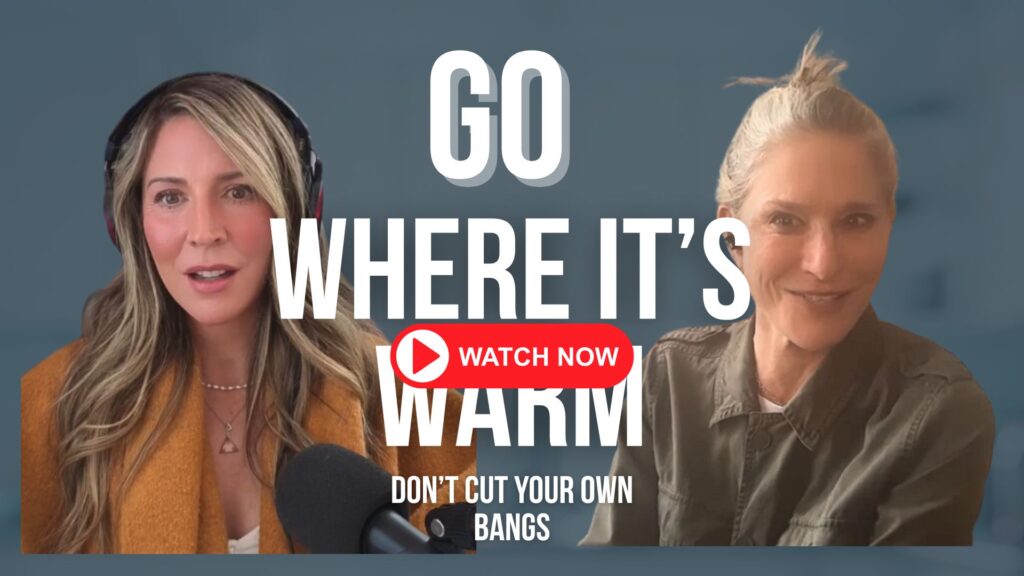
In this episode of Don’t Cut Your Own Bangs, I sit down with journalist and Talk Stoop creator Cat Greenleaf for a deeply honest, surprisingly warm conversation about high-functioning addiction, emotional damage, and the slow, courageous work of reclaiming trust in yourself again.
It’s not heavy for the sake of being heavy. It’s human. And it’s full of relief.
Emotional damage can hide behind success. Learn how high-functioning struggle impacts self-trust — and how healing can begin, gently and honestly.
What We Mean When We Say “Emotional Damage”
Emotional damage isn’t a diagnosis — it’s an experience.
It’s what builds up over time when stress, addiction, shame, trauma, or self-abandonment go unaddressed. It’s the quiet erosion of self-trust. The constant second-guessing. The inner voice that says, “You should be able to handle this.”
And here’s the tricky part: You can still function really well while carrying it.
You can work, parent, create, succeed — and still feel like something inside you is fraying. That’s why emotional damage so often goes unnoticed, even by the people living with it.
High-Functioning Addiction: When Holding It Together Costs You
Cat started drinking young and knew early on that alcohol had a strong pull for her. For years, she built an extraordinary career alongside a private struggle — Emmy wins, major networks, creative success, marriage and motherhood.
From the outside? Everything worked.
From the inside? It took up nearly all her mental and emotional energy.
High-functioning addiction is especially confusing because the world keeps rewarding you. You’re praised for showing up, producing, performing — even when it’s costing you peace, clarity, and connection.
As Cat shares, the constant negotiations with herself were exhausting: Should I drink tonight? How much? Can I control it this time?
That inner loop — day after day — is emotional damage in motion.
The Quiet Cost of “I’m Fine”
One of the hardest parts of emotional damage is how lonely it can feel.
When you’re capable, people assume you’re okay. And when shame is involved, it can feel safer to keep going than to stop and ask for help.
Shame has a sneaky way of whispering: “If people knew this about me, everything would fall apart.”
But Cat’s story gently challenges that fear. When she eventually allowed herself to be seen — really seen — nothing imploded. Instead, things softened. Expanded. Got more honest.
Learning to Trust Yourself Again (Gently)
Rebuilding self-trust when you have emotional damage doesn’t happen all at once. It’s not a bold declaration — it’s a series of small permissions.
For Cat, that looked like:
Listening when something no longer felt warm or aligned
Letting go of rigid rules around what recovery “should” look like
Allowing curiosity to guide her next chapter
Choosing honesty over performance
Trusting yourself doesn’t mean you’ll never doubt again. It means you’re willing to listen — even when the answer surprises you.
Go Where the Water’s Warm
One of the most memorable moments in my conversation with Cat Greenleaf was when she shared a piece of advice given to her by Brooke Sheilds:
“Go where the water’s warm.”
It sounds simple — almost too simple — but that’s what makes it powerful.
The idea came from a conversation about careers, but it applies to so much more than work. It applies to relationships. Recovery. Creativity. Healing. Even the way we talk to ourselves.
So many of us stay in places that feel cold because we think we’re supposed to. We stay because we’ve invested time, energy, or identity there. Because it looks good on paper. Because leaving would mean admitting something isn’t working anymore.
Emotional damage often keeps us loyal to what hurts — not because it’s right, but because it’s familiar.
Learning to trust yourself again means noticing where your body softens… and where it tenses. It means paying attention to what gives you energy instead of draining it. And it means allowing yourself to move toward warmth without needing a dramatic explanation.
Healing Emotional Damage Isn’t About Erasing the Past
One of the most compassionate parts of Cat’s story is that she doesn’t pretend her past didn’t happen.
She knows she drank longer than she wanted to. She knows she hurt people. She knows she carries guilt.
And she’s learning to hold all of that without letting it define her.
Healing emotional damage isn’t about rewriting your history — it’s about changing your relationship to it.
It’s about saying: This happened. I learned something. And I’m still allowed to move forward.
There’s a quiet maturity in that. A steadiness that doesn’t demand perfection — just honesty.
What Emotional Healing Actually Looks Like (In Real Life)
Healing doesn’t usually arrive as a breakthrough moment. More often, it shows up in small, almost boring choices:
Choosing rest instead of pushing
Being honest when something isn’t working
Letting go of paths that no longer fit
Redefining success on your own terms
Trusting your inner signals again — even if they don’t make sense to anyone else
Cat’s story reminds us that healing doesn’t have to be loud or public to be real. Sometimes the bravest thing you can do is listen to yourself and quietly change course.
If You See Yourself in This Story
If you’re reading this and thinking, “This feels uncomfortably familiar,” I want you to hear this:
You don’t have to hit rock bottom to take yourself seriously. You don’t have to fall apart to deserve support. And you don’t have to keep carrying emotional damage alone just because you’ve been good at functioning.
Being capable doesn’t mean you’re not hurting. And needing care doesn’t mean you’ve failed.
It just means you’re human.
Key Takeaways
Emotional damage often hides behind high-functioning success. You can look “fine” and still be struggling inside.
High-functioning addiction and emotional exhaustion are often rewarded — until they’re not.
Self-trust erodes slowly when we ignore what we already know. Healing begins by listening again.
Shame thrives in secrecy, not truth. Being seen often brings relief, not ruin.
Recovery and healing don’t have to follow someone else’s rules. Your path is allowed to look like your path.
Go where the water’s warm. Pay attention to what brings ease, clarity, and energy — and let that guide you.
If this conversation resonated, I’d love for you to listen to the full episode of Don’t Cut Your Own Bangs and share it with someone who might need this reminder too.
You’re not behind. You’re not broken. And you’re allowed to choose warmth.
👉 If this episode resonates, share it with a friend who might also need this reminder. And don’t forget to subscribe so new episodes find you—no chasing required.
RATE, REVIEW, SUBSCRIBE TO “DON’T CUT YOUR OWN BANGS”
Like your favorite recipe or song, the best things in life are shared. When you rate, review, and subscribe to this podcast, your engagement helps me connect with other listeners just like you. Plus, subscriptions just make life easier for everybody. It’s one less thing for you to think about and you can easily keep up to date on everything that’s new. So, please rate, review, and subscribe today.
DANIELLE IRELAND, LCSW
I greatly appreciate your support and engagement as part of the Don’t Cut Your Own Bangs community. Feel free to reach out with questions, comments, or anything you’d like to share. You can connect with me at any of the links below.
Join my email list to get access to tools + resources to help improve your mental health. Plus, be the first to know about new episodes, blogs and more.
Get actionable advice + mental health tips in your inbox.